Thursday, December 10, 2009

AlJazeera English: Empire: The Long War


This is part two of an interesting program hosted by Marwan Bishara that aired in October with Marc Sageman, Larry Wright, Robert Pape and Gen. Richard Myers. One of the cut segments that starts about after about 17:10 minutes includes clips from a brief interview with me. For the record, while I certainly believe that preventive action by police raises complicated issues, I do not agree with the other people interviewed who suggest that the conviction rate should be the measure of success. The absence of attacks should be the measure of success. - CD

Friday, December 04, 2009

Hoder in Happier Times


Shadowland: The Blogfather and the Spy, 3 December 2009
The "secret witness" in Tehran's show trials may be the man who started Iran's blogging revolution. http://www.newsweek.com/id/225506

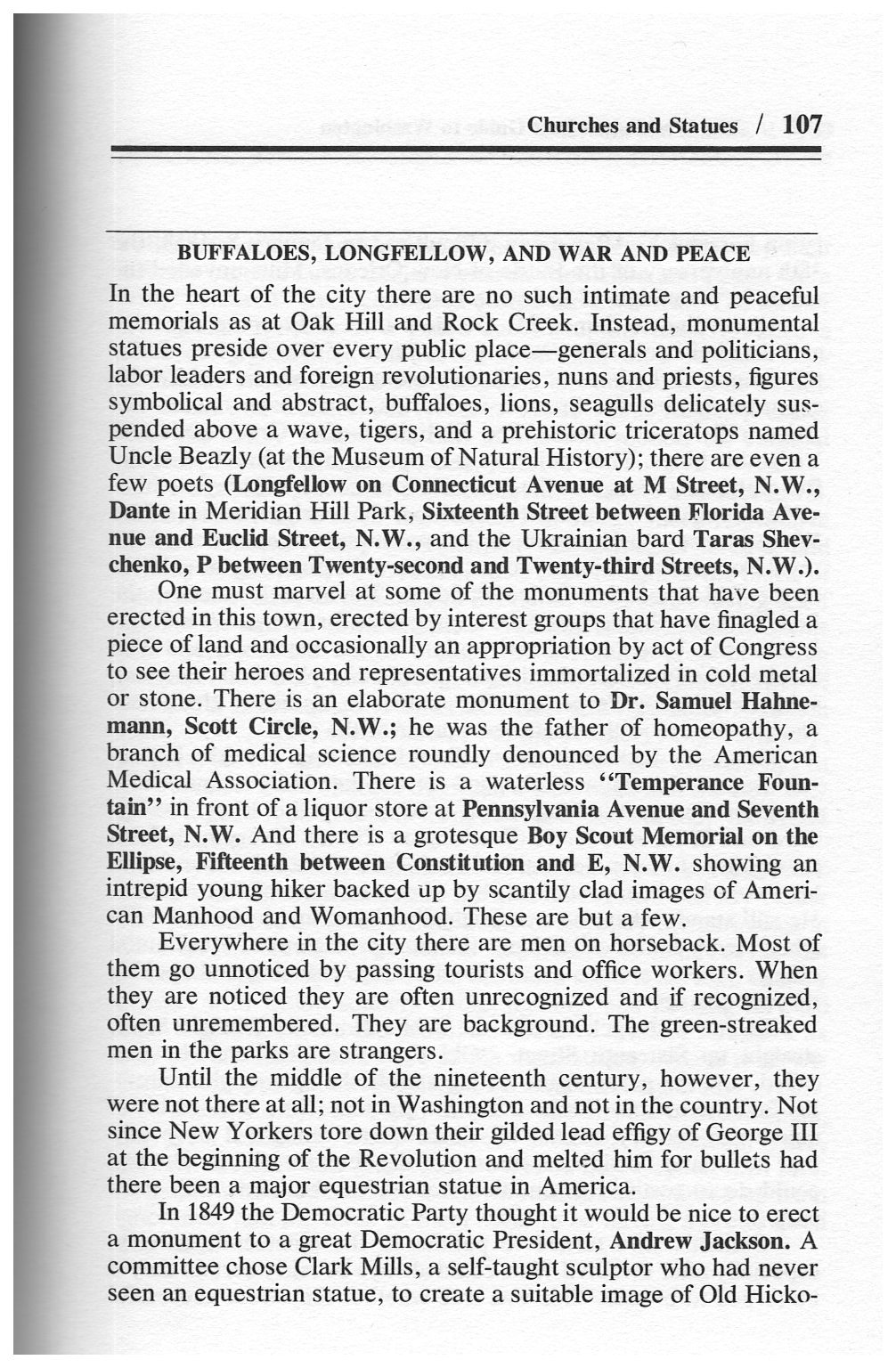
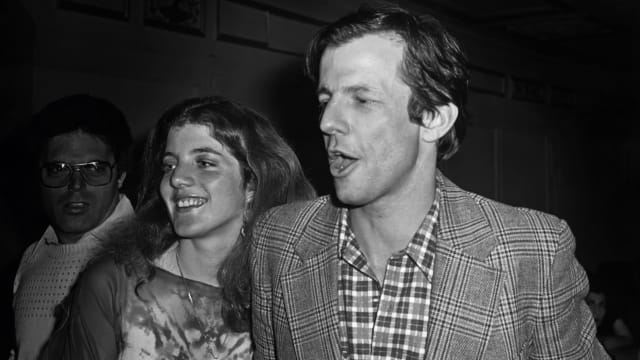
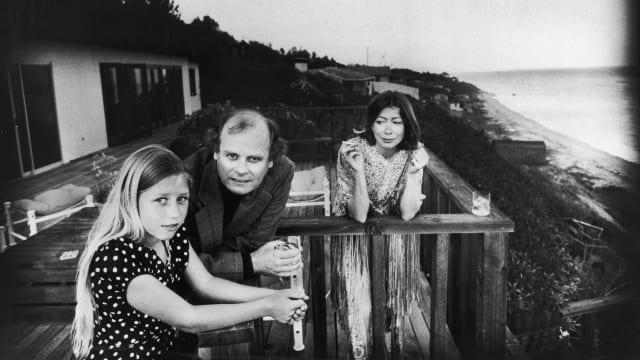
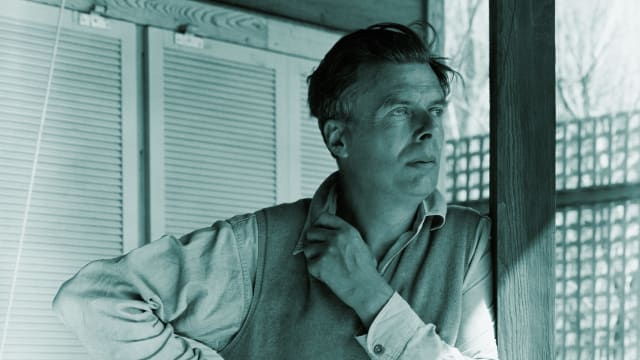
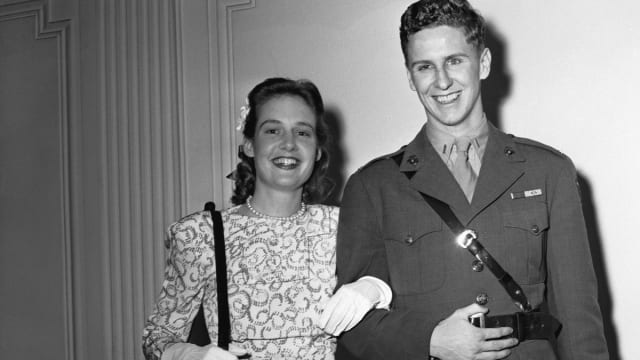
These pictures of Hossein Derakhshan from his Facebook pages give a good sense of the mercurial Iranian blogger in happier times.

It's high time that "Hoder" was set free.


Monday, November 30, 2009

War in Context: The Swiss Minaret "Threat"

The European minaret-missile threat

Bigotry is on the rise in “the westerly excrescence of the continent of Asia.”

That unpoetic but topographically-precise description of Europe comes from the Oxford archeologist, Barry Cunliffe.

Whenever voices declaring that European culture is under threat are at their most strident, it’s always worth remembering the actual nature of Europe’s physical form.

As a continent it is nothing more than a malleable contrivance with its ambiguous, historically shifting eastern edge. As a result, it is and always has been, an ethnic and cultural melting pot.

Thus the irony when Europe’s self-appointed protectors take a firm stand in the name of its defense: they so often lack a real appreciation for the very thing to which they have pledged their allegiance.

Why is it that the people who most easily become possessed by ideas about cultural purity are themselves so often culturally impoverished?

Because culture in its richness and complexity is not the real issue.

This is about how individuals respond to the other.

Does the unfamiliar prompt interest and curiosity?

Or does it provoke fear?

Fear in response to the other says more about the fearful than it says about the objects they fear.

The fear of the foreign is at its root a fear of becoming foreign. It is a fear of becoming a stranger in one’s own land.

* * *

In the latest outbreak of European xenophobia, the minaret has become a missile in a campaign to ban their construction — that is, the construction of minarets, not missiles.

This is a curious iconic transformation. Is the Swiss People’s Party suggesting that Switzerland, in which currently there are only four minarets, is at risk of becoming a missile-minaret launching pad threatening the rest of Europe with Islamization? (This is after all a depiction of missile-minarets ready for launch — not incoming missile-minarets about to explode.)

By Sunday it became apparent that Swiss voters had little interest in dissecting the visual absurdity of the campaign poster — a majority seemed to have bought the implicit message: Islam = violence, death and destruction.

The campaign’s final week of fear-mongering managed to raise support for the ban from 37% up to 57.5%, with passage in the majority of cantons meaning that a constitutional amendment will follow....http://warincontext.org/2009/11/29/the-european-minaret-missile-threat/

Saturday, November 28, 2009

"Securing the City" on NYT 100 Notable Books 2009

http://www.nytimes.com/gift-guide/holiday-2009/100-notable-books-of-2009-gift-guide/list.html?ref=books#list-group-1

Thursday, November 26, 2009

Excerpts from today's Iraq Inquiry hearing

A reminder of the Bush administration's sense of drift before 9/11:

22 SIR MARTIN GILBERT: I have just two more questions before
23 9/11. The first is, during that period again
24 focusing on Iraq were
the members of the
25 administration you were talking to at that time
16
1 beginning to contemplate removing Saddam by force,
2 perhaps even within a fixed period?
3 SIR CHRISTOPHER MEYER: I didn't see that emerging from the
4 interagency process at all. Every now and again, one
5 would say to Condoleeza Rice or to Colin Powell, "How is
6 the Iraq review going?", and they would just say, "Well,
7 we are still talking about it".
8 It wasn't going anywhere, to be honest with you,
9 and, in fact, it looked at the time, technically after
10 the summer break in early September it
kind of looked
11 like the Bush administration as a whole wasn't going
12 anywhere. It lost a sense of direction very rapidly and
13 I remember sending a telegram on 10 September, literally
14 went out on the eve of 9/11. I think they were about to
15 have a visit by John Prescott and this was a form of
16 briefing for him saying,
"This is an administration
17 which appears to be running out of steam", was losing
18 a sense of direction 19
THE CHAIRMAN: Can I interrupt just to ask, did you mean
20 generally across the whole range of policy?
21 SIR CHRISTOPHER MEYER: I do. I'm sort of compressing
22 things here. What had happened domestically was, with
23 immense political effort, Bush I
mean Bush put all
24 his political capital, most of his political capital in
25 those first few months in getting a big taxcut
through
17
1 congress for getting benefits and prescription medicine
2 for senior citizens.
3 He got them but they were pyrrhic victories, they
4 exhausted him and he lost his majority in the Senate as
5 a result. Come September 2001, before 9/11, everybody
6 was saying that effort has killed him. Rumsfeld, there
7 was a huge bear market in Rumsfelds, because he didn't
8 seem to be reorganising the Department of Defense as he
9 promised to do. He got lost in detail, so the story
10 went. There was a big bear market in Colin Powells
11 because his narrowing and deepening and what he was
12 doing in the Middle East was going nowhere, and there
13 was a cataclysmic market in Paul O'Neills, who was the
14 Treasury Secretary who was soon to be dismissed.
15 So on the very eve of the great atrocity, it looked
16 like an administration that had got into trouble very
17 quickly.
18 THE CHAIRMAN: Just to round off, Iraq really not figuring
19 very much, if at all?
20 SIR CHRISTOPHER MEYER: Iraq was not it
was like
21 a grumbling appendix, I think is the way I would
22 describe it.....

22 SIR MARTIN GILBERT: I have just two more questions before
23 9/11. The first is, during that period again
24 focusing on Iraq were
the members of the
25 administration you were talking to at that time
16
1 beginning to contemplate removing Saddam by force,
2 perhaps even within a fixed period?
3 SIR CHRISTOPHER MEYER: I didn't see that emerging from the
4 interagency process at all. Every now and again, one
5 would say to Condoleeza Rice or to Colin Powell, "How is
6 the Iraq review going?", and they would just say, "Well,
7 we are still talking about it".
8 It wasn't going anywhere, to be honest with you,
9 and, in fact, it looked at the time, technically after
10 the summer break in early September it
kind of looked
11 like the Bush administration as a whole wasn't going
12 anywhere. It lost a sense of direction very rapidly and
13 I remember sending a telegram on 10 September, literally
14 went out on the eve of 9/11. I think they were about to
15 have a visit by John Prescott and this was a form of
16 briefing for him saying,
"This is an administration
17 which appears to be running out of steam", was losing
18 a sense of direction 19
THE CHAIRMAN: Can I interrupt just to ask, did you mean
20 generally across the whole range of policy?
21 SIR CHRISTOPHER MEYER: I do. I'm sort of compressing
22 things here. What had happened domestically was, with
23 immense political effort, Bush I
mean Bush put all
24 his political capital, most of his political capital in
25 those first few months in getting a big taxcut
through
17
1 congress for getting benefits and prescription medicine
2 for senior citizens.
3 He got them but they were pyrrhic victories, they
4 exhausted him and he lost his majority in the Senate as
5 a result. Come September 2001, before 9/11, everybody
6 was saying that effort has killed him. Rumsfeld, there
7 was a huge bear market in Rumsfelds, because he didn't
8 seem to be reorganising the Department of Defense as he
9 promised to do. He got lost in detail, so the story
10 went. There was a big bear market in Colin Powells
11 because his narrowing and deepening and what he was
12 doing in the Middle East was going nowhere, and there
13 was a cataclysmic market in Paul O'Neills, who was the
14 Treasury Secretary who was soon to be dismissed.
15 So on the very eve of the great atrocity, it looked
16 like an administration that had got into trouble very
17 quickly.
18 THE CHAIRMAN: Just to round off, Iraq really not figuring
19 very much, if at all?
20 SIR CHRISTOPHER MEYER: Iraq was not it
was like
21 a grumbling appendix, I think is the way I would
22 describe it.....


2 SIR CHRISTOPHER MEYER: It took a while for policy to
3 converge sorry,
if we are talking about Americans,
4 the President accepting, for realpolitik reasons, it
5 would be better to go through the United Nations than
6 not, which was a repudiation of where his VicePresident
7 stood.
8 It took a while to get there, probably until August
9 of that year. I said in my briefing telegram to
10 Tony Blair, before Crawford, a copy of which, again,
11 I couldn't get hold of in the archive and
by that
12 time there had been a couple of months, maybe more,
13 maybe three months, in which contingency discussion of,
14 "If it came to a war in Iraq, how would you do it?" It
15 was all very it
was all very embryonic.
16 Of course, while regime change was the formal policy
17 of the United States of America, it didn't necessarily
18 mean an armed invasion, at that time, of Iraq and it may
19 sound like a difference without a distinction or
20 a distinction without a difference, but it wasn't, not
21 at that time, and so I said I
think as I remember
22 I said to Tony Blair, "There are three things you really
23 need to focus on when you get to Crawford. One is how
24 to garner international support for a policy of regime
25 change, if that is what it turns out to be. If it
27
1 involves removing Saddam Hussein, how do you do it and
2 when do you do it?" And the last thing I said, which
3 became a kind of theme of virtually all the reporting
4 I sent back to London in that year was, "Above all" 5
I think I used the phrase "above all "
get them to
6 focus on the aftermath, because, if it comes to war and
7 Saddam Hussein is removed, and then ...?"
8 The other thing at that time, Sir Martin, which
9 people tend to forget is actually what was blazing hot
10 at the time and a far more immediate problem and
it
11 wasn't Iraq, it was the Middle East, because the
12 Intifada had blown up, hideous things were going on in
13 the West Bank, the Israeli army were in the West Bank
14 and we had prevailed on the Americans, as one example of
15 British influence working that year, to put out a really
16 tough statement before Tony Blair arrived in Crawford
17 telling the Israelis in summary that they needed to
18 withdraw from the West Bank towns and withdraw soon.
19 Now, let me be quite frank about this. Crawford was
20 a meeting at the President's ranch. I took no part in
21 any of the discussions, and there was a large chunk of
22 that time when no adviser was there, I think I
don't
23 know whether David Manning has been before you yet, but
24 when he comes before you, he will tell you, I think,
25 that he went there with Jonathan Powell for a discussion
28
1 of Arab/Israel and the Intifada. I think it was at that
2 meeting that there was a kind of joint decision between
3 Bush and Blair that Colin Powell should go to the region
4 and get it sorted.
5 I believe that, after that, the two men were alone
6 in the ranch until dinner on Saturday night where all
7 the advisers, including myself, turned up.
8 So I'm not entirely clear to this day I
know what
9 the Cabinet Office says were the results of the meeting,
10 but, to this day, I'm not entirely clear what degree of
11 convergence was, if you like, signed in blood, at the
12 Crawford ranch....

23 SIR CHRISTOPHER MEYER: When you look at the conditions now,
24 the socalled
conditions, we failed miserably on one,
25 which was trying to wind down the Arab/Israel dispute,
64
1 where, almost, things went into reverse rather than
2 going forward. On 3
SIR RODERIC LYNE: Just on that 4
SIR CHRISTOPHER MEYER: Do you want me to take each
5 condition one by one?
6 SIR RODERIC LYNE: Yes, let's take that one first. Didn't
7 the Americans in the end agree to publish the route map?
8 SIR CHRISTOPHER MEYER: Yes, but it led to b*****r all at the
9 time, let's be frank about it.
10 The high point of British influence on the
11 Arab/Israel dispute was the American statement of
12 4 April in which at a time when the Israeli defence
13 force was in West Bank towns creating some damage and
14 casualties, the Americans called for Israel's early
15 withdrawal from the West Bank towns. That made life
16 infinitely easier for Tony Blair when he came to
17 Crawford and had to do a joint press conference with
18 President Bush, because, if nothing had happened on
19 that, I think it could have revealed a rather large
20 split between Blair and Bush.
21 I say that was a high point of British influence,
22 because, no sooner had that statement come out demanding
23 the early withdrawal of the Israeli forces from the
24 West Bank, than a major political operation was launched
25 in Washington the following week to reverse the nature
65
1 of that call.
2 Colin Powell had been sent to the region, as I said
3 before, and when he came back, he was strongly of the
4 view that he had been consistently undermined by his
5 enemies, while he was away, in the Administration, in
6 the US Congress and by someone who is now the Israeli
7 Prime Minister, Benjamin Netanyahu, coming to Washington
8 and effectively working against him.
9 SIR RODERIC LYNE: So we got some progress on the
10 Middle East, but not, in your opinion, nearly enough 11
SIR CHRISTOPHER MEYER: No, sorry, let me just finish this
12 point.
13 The definitive American statement was then one made
14 in June which rowed back a long way from what they had
15 said on 4 April, and effectively said in a practical
16 sense that, "We will leave the Middle East on a care and
17 maintenance basis and, by the way, we are not going to
18 do anything until the Palestinians democratise
19 themselves", and what that means is getting rid of
20 Yasser Arafat, which he didn't do until he died.
http://www.iraqinquiry.org.uk/transcripts/writtenevidence-bydate.aspx

Al Jazeera English "Empire" Takes on Europe

Is Europe the new superpower? That hasn't been the conventional wisdom in the face of American military preeminence and the fast-rising economies of the BRIC states. But my friend Marwan Bishara takes a closer look on his program, "Empire," this month:


Europe has finally adopted a new treaty to strengthen its union, and
chosen a president and foreign minister to speak with one voice for
the continent.

Twenty-seven countries, with more than 500 million people, a combined
economy bigger than the US and almost two million soldiers under arms,
the European Union is to all intents and purposes, a superpower.

However, Europeans remain divided on central issues. Its cheerleaders,
and foremost the dominating Franco German alliance, are celebrating
the supranational Union they expect to lead globally, just as its
detractors warn of a giant leap toward a federalist Europe that looks
to compromise their national sovereignties and weakens their
democracies.

Despite inner wrangling, a prosperous and stable Europe has become a
magnet for neighbouring countries that are being rebuffed by the most
powerful members of the union.

This raises questions about what constitutes a unified European identity.
In the spirit of multicultural diversity and openness, Europe has
recognised its 15 million Muslim citizens, launched the
Euro-Mediterranean process and accepted the accession candidacy of its
largest Muslim neighbour, Turkey.
Recently however, Europe has been backpedalling on its overtures and
promises, erecting immigration barriers and buffer zones with their
less prosperous neighbours, dampening Ankara's chances of joining the
Union, and raising allegations from some quarters that Europe is
essentially a Christian club.

Will 27 nations be able to pull together as one and become a dominant
power in the 21st century? Will they be dominated by the Franco-German
axis, or will they pull themselves apart as each individual country
tries to assert its own national interest before that of the
collective good?

This month's guests:

Timothy Garton Ash
European Studies, Oxford University

Tariq Ramadan
President, European Muslim Network

Slavoj Zizek
Slovenian Philosopher

The Sincerest Form of Flattery


The cover of L'Express on November 26 is "Sarkozy: The Obama Obsession"

The cover of Newseek International two months before was "Sarkozy's Obama Complex"

THE IRAQ INQUIRY: BRITISH HEADLINES

THE INDEPENDENT:

Officials knew WMD evidence was tainted

Intelligence against Iraq used by Blair on eve of invasion had only arrived days before, civil servant tells inquiry

By Michael Savage, Political Correspondent

Intelligence revealing that Saddam Hussein's WMD had been dismantled was received by the Government just days before Tony Blair sent troops into the country, senior officials have admitted.
Ministers were also given repeated warnings that intelligence gathered on Iraq's weapons programmes was unreliable. However, Mr Blair told the Commons that Saddam Hussein did have chemical and biological weapons as he prepared the way for the invasion in March 2003. ... http://www.independent.co.uk/news/uk/politics/officials-knew-wmd-evidence-was-tainted-1827616.html

THE DAILY MAIL:

What an insult to the dead: Brown accused of new Iraq cover-up as he 'blocks' release of incriminating evidence

By TIM SHIPMAN

Last updated at 12:21 AM on 26th November 2009


Gordon Brown was accused of engineering a new Iraq cover-up yesterday by handing Whitehall departments the right to block the release of secret documents about the war.
Liberal Democrat leader Nick Clegg ambushed the Prime Minister in the Commons, angrily accusing him of trying to 'suffocate' the Chilcot Inquiry.
Relatives of the 179 servicemen who died in Iraq are desperate for the inquiry to finally uncover the truth and apportion blame.....http://www.dailymail.co.uk/news/article-1230993/Brown-accused-suffocating-Iraq-inquiry-blocking-incriminating-evidence.html


THE DAILY EXPRESS:

FORMER PM TONY BLAIR ‘TOLD BEFORE WAR THAT IRAQ HAD NO NUCLEAR ARMS’


Former PM Tony Blair ‘told before war that Iraq had no nuclear arms’
Thursday November 26,2009

By Cyril Dixon

BRITAIN invaded Iraq just 10 days after ministers were told that Saddam Hussein had no weapons of mass destruction (WMDs), an inquiry heard yesterday.

Foreign Office staff warned that the Iraqi dictator’s nuclear programme had been dismantled and there was no evidence he had chemical or biological weapons.
But despite the briefings, the then Prime Minister Tony Blair ordered the troops to join the American-led offensive six years ago.
Sir William Ehrman, Foreign Office director of international security at the time, said ministers were repeatedly warned intelligence on Iraq’s weapons was “patchy”.
He gave Sir John Chilcot’s inquiry into the conflict a list of briefings.
In April 2000, the picture was described as “limited to chemical weapons”, in May 2001 the knowledge of WMDs and missiles was “patchy” and in March 2002 the intelligence was “sporadic and patchy”. In August 2002 a briefing noted that “we know very little” about Iraq’s chemical and biological weapons since late 1998, and in September 2002 the intelligence “remained limited”.
Sir William said: “We did, I think on March 10, get a report that chemical weapons might have remained disassembled and Saddam hadn’t yet ordered their assembly.
“There was also a suggestion that Iraq might lack warheads capable of effective dispersal of agents.”...http://www.express.co.uk/posts/view/142508/Former-PM-Tony-Blair-told-before-war-that-Iraq-had-no-nuclear-arms-

Wednesday, November 18, 2009

Is Comedy The Future of News?

Wednesday, November 11, 2009

Newsweek: The Decade in 7 Minutes


Congratulations to Sarah Frank and Andrew Bast for a great job on this.

The Onion's "Modern Warfare 3"


Ultra-Realistic Modern Warfare Game Features Awaiting Orders, Repairing Trucks